There's a simple test for whether an event is working for the brand.
Remove all the logos. Hide every label. Would the audience still know where they are?
At Veuve Clicquot, they would
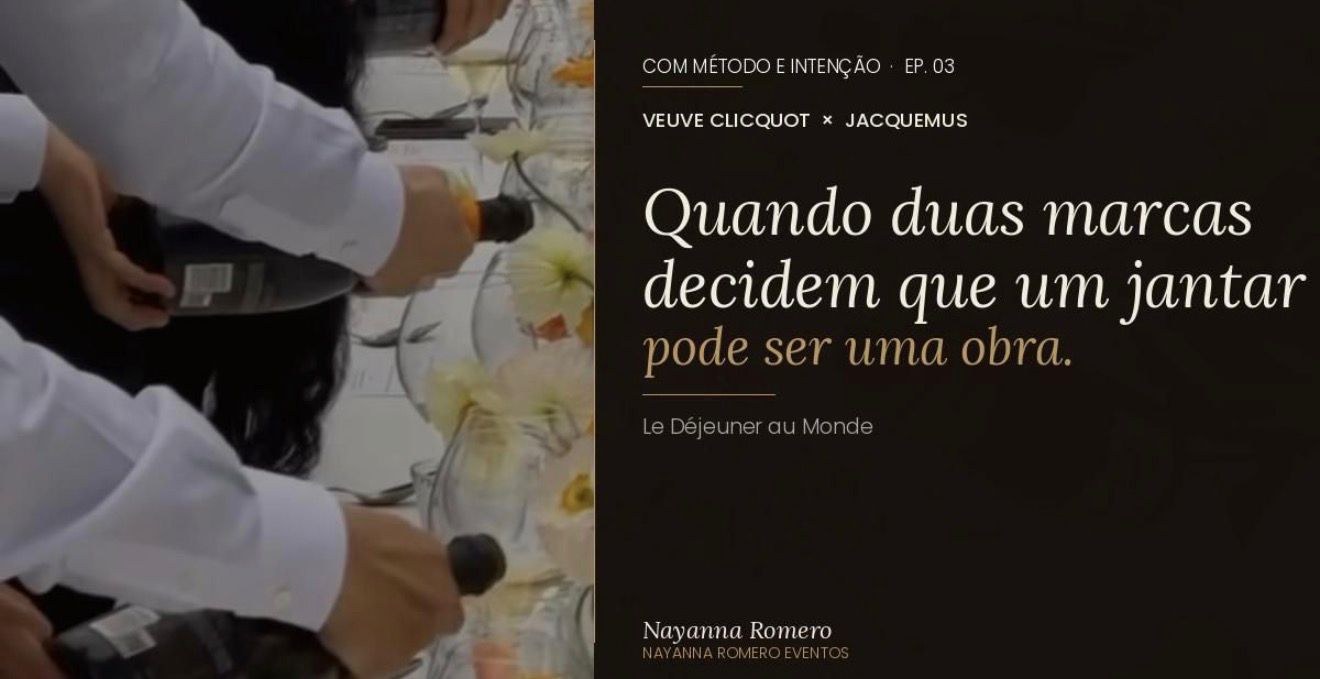
Yellow is in everything — the floral architecture, the textiles, the light, the details that look like coincidence but were calculated with precision. You don't need to see the label. The environment has already communicated the brand's complete identity.
When that logic meets Jacquemus in Le Déjeuner au Monde — celebrating La Grande Dame 2018 — the precision doubles. Two brands with unmistakable visual identities decided to share a table. The result wasn't a product partnership. It was an experience built for a select few, where every element of the environment communicated both brands before a single word was spoken.
The geometry of yellow
Veuve Clicquot's yellow floor. The poppy that signs the Jacquemus collection. The transparent crystal that doesn't compete with the flower. The handwritten menu. Every detail with narrative function — nothing left to chance.
This is what I call sensory identity.
And it only exists when the event is designed by people who understand that every element — color, scent, texture, floral composition — is a layer of brand communication.
Companies that reach this level stop treating events as operational expense. They start treating them as the most powerful communication product they have.
Three questions I bring to the start of every project
- What is your brand's yellow?
- What flower tells your brand's story?
- What does your event need to make people feel before any presentation begins?
The answers to these three questions define everything that follows — from the floral composition to the final toast.
Method and Intent series. Each week, one real brand and one lesson for the global market.