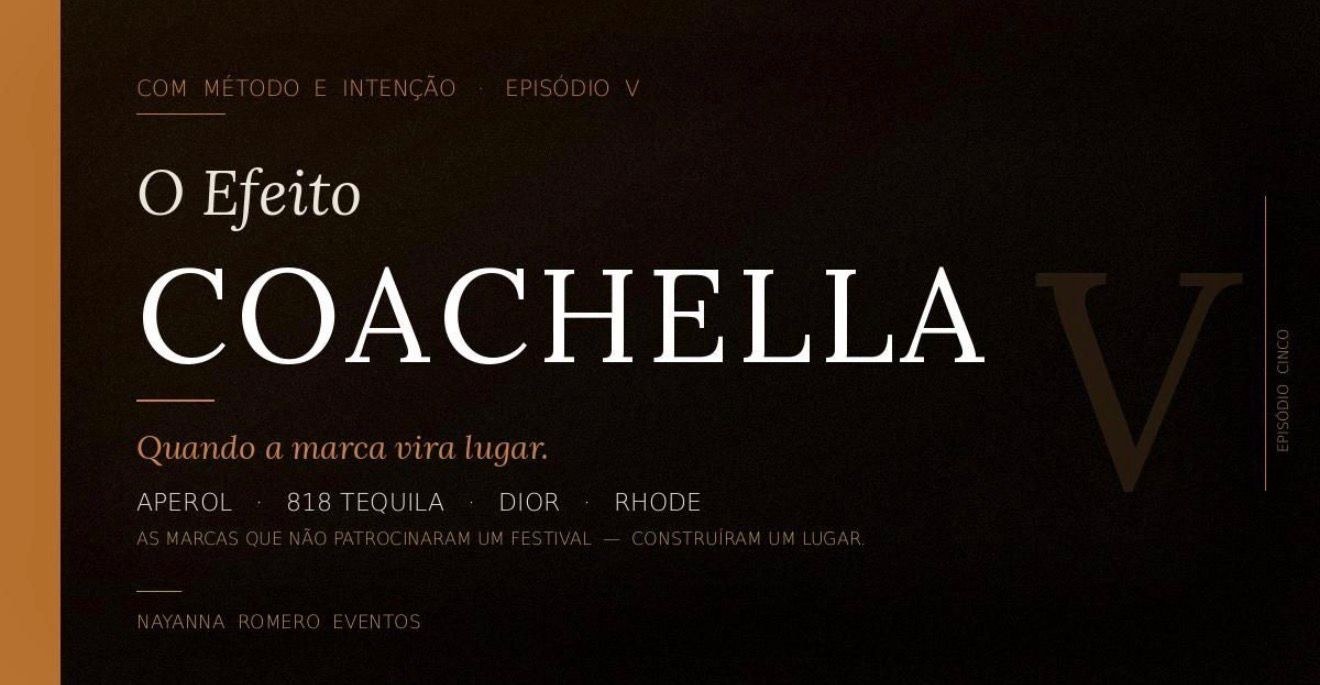
Coachella 2026 ended and left a lesson that isn't about the festival.
Four brands, four paths
Aperol didn't set up a sponsored booth. It built the Aperol Day Club — a place with DJs, interactive stations, its own architectural identity. People didn't show up because it was sponsored. They showed up because they wanted to be there.
818 Tequila designed its Outpost inspired by Mid-century Googie architecture and the retrofuturism of Palm Springs. Every texture, every breezeblock, every element tells the same story the brand tells on the bottle.
Dior dressed Sabrina Carpenter in four exclusive looks for a performance that went viral on Vogue, InStyle, Harper's Bazaar — without a single physical activation at the festival.
Rhode became one of the most talked-about brands of the festival by genuinely anchoring itself in Justin Bieber's musical universe. Not as sponsorship. As belonging.
The brand that builds a world is remembered. The brand that rents a space is forgotten by Sunday.
2026 swapped spectacle for narrative
The specialized press has already named 2026 the year luxury marketing swapped spectacle for narrative. Less visibility for visibility's sake. More emotional impression.
This isn't an American festival trend. It's the global translation of what I've defended for years in the Brazilian corporate universe.
What this teaches about events in Brazil
A corporate event isn't a backdrop where your brand appears. It's your brand, speaking in silence, through everything the guest sees, feels, breathes.
- Floral architecture doesn't decorate. It narrates.
- Sensory environment doesn't beautify. It positions.
- Creative direction doesn't organize. It translates the brand's thesis into experience.
When a CEO chooses to celebrate a company milestone, they aren't hiring décor. They're choosing who will translate the brand's soul into a place where guests want to be — and want to keep talking about.
That's the difference between an event that happens and an event that stays.
Method and Intent is a series about how global brands use environment, architecture and sensory narrative as strategic tools — and what that teaches about corporate events in Brazil. This is the final episode of the first season.